neither/nor
collected works
2003 – 2008
Rat-Drifting
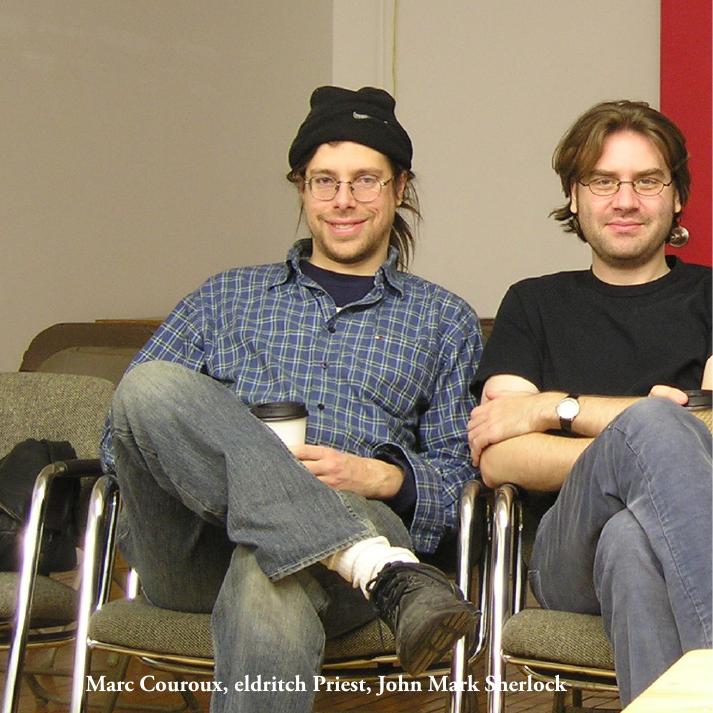
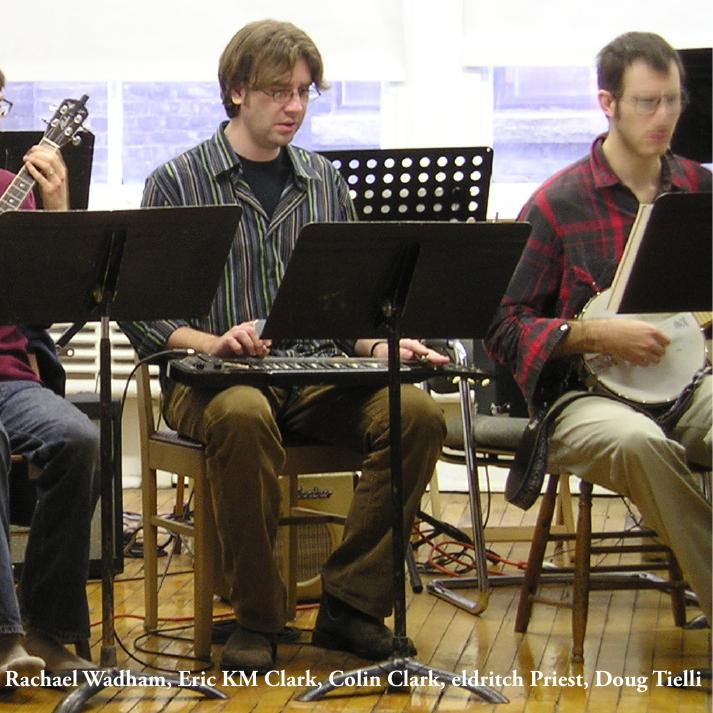
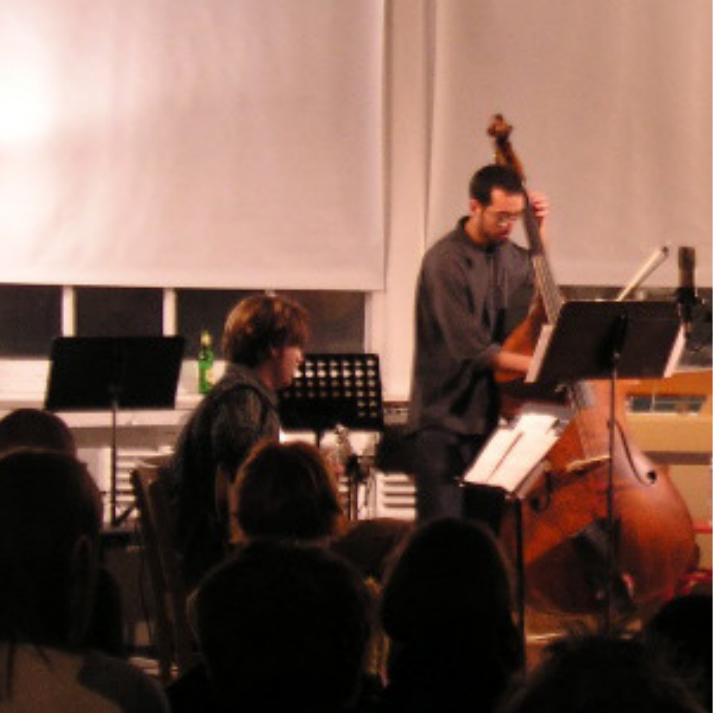
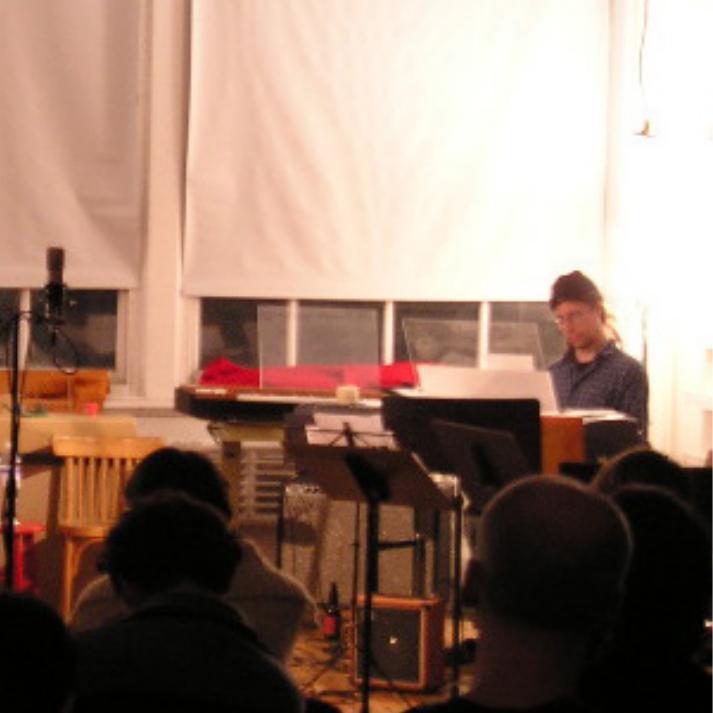
neither/nor, the project, came about in 2001 from a desire John Mark Sherlock and I had to create a context in Toronto whereby experimental music could insist on the right to be esoteric. This "right" was something that Morton Feldman wrote about in a 1969 essay titled "Neither/Nor," a text in which he questioned just how much art and social life should belong together. For Feldman, social life is little more than a "vast digestive system that chews up whatever finds its way into its mouth." As such, it "doesn't give a damn about art." If this is the case, then "why," asks Feldman, "is [art] so anxious to find its way into this huge maw?" His response is cynical but indicative of the angsty way that "the modern artist, whose tendency is to use everything at his disposal without any truly personal contribution, naturally reaches toward whatever he feels is real." That society should feel more real than art is, for Feldman, evidence of a gulf between the two domains that misses the very point of art. "How," he writes, "can you bridge what is real with what is only a metaphor? Art is only a metaphor." By this Feldman means that art is precisely what resists identity with society, with what is grasped as real, as literal. Like a metaphor, art's worth lies in the way its occasion draws a difference from a likeness. And it is in this very expression of difference that, as Feldman suggests, "art becomes its own deliverance." In other words, the metaphor of art should neither cross a bridge nor leap into what would only leave it a masticated husk.
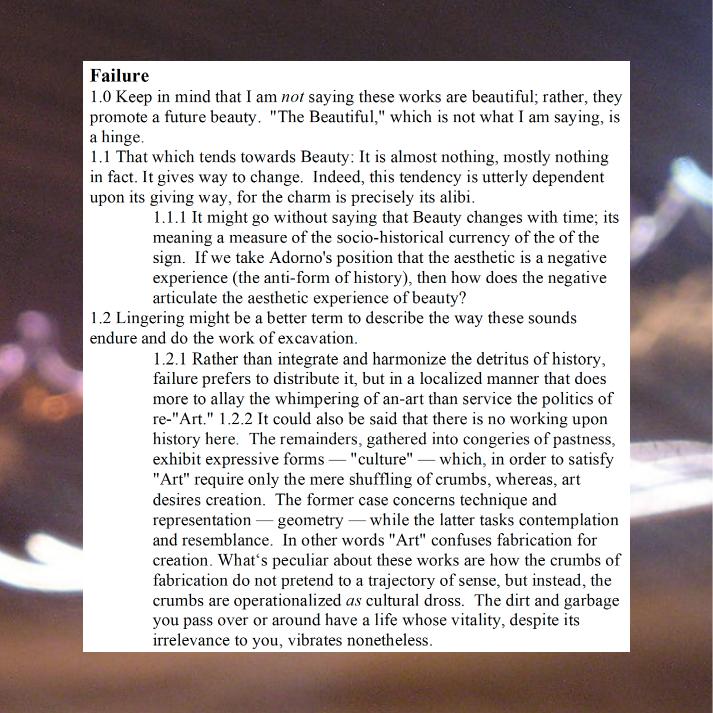
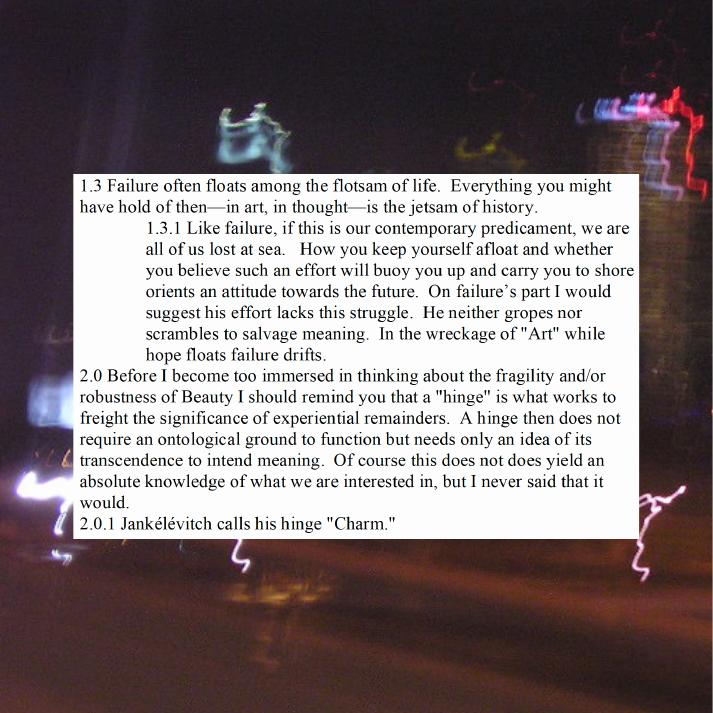
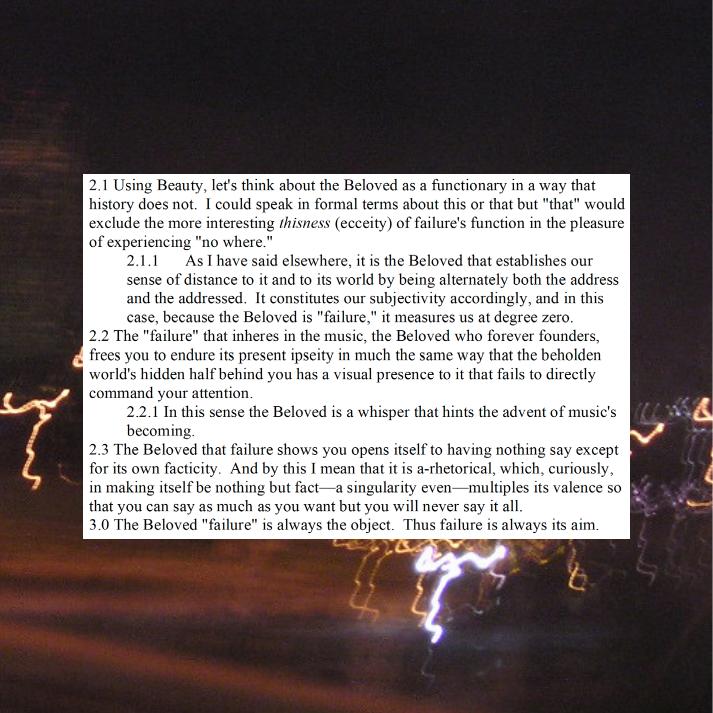
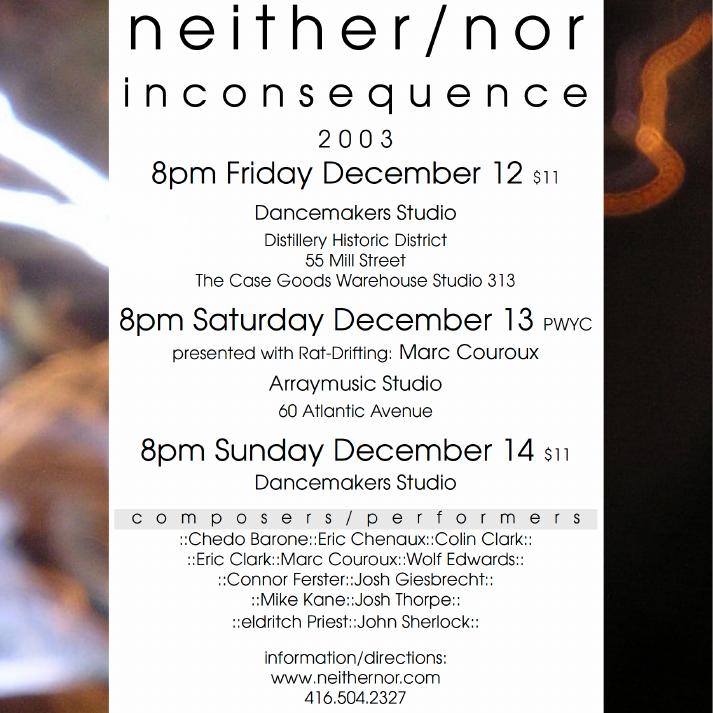
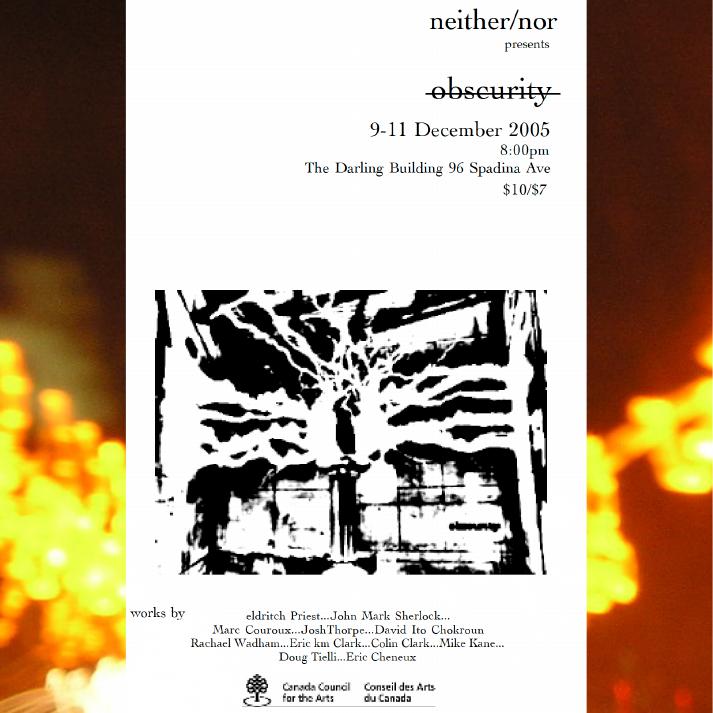
Now, this "right to be esoteric," to abide in the gaps that arise between society and its metaphors, was in some sense redundant; or rather, it was unnecessary. Given experimental chamber music's place in the social imaginary—its effective non-place—it could be argued that neither/nor's esoteric aspiration was always already achieved. Our "secret" was never at risk of being exposed, or our metaphor being understood. As far as "society" was concerned, there was nothing to be denied this right. But of course, there is the matter of context. Within this niche of a niche of a niche that locates "experimental chamber music" in a broader field of contemporary composition (in Canada at least), a general pressure to matter in an exoteric way could be said to make the right to be esoteric something of a scandal. If art is made for a public whose precious attention is what justifies its existence, then art that fails to meet this imperative is, simply put, unjustified. So, I guess, in a sense, what I'm saying is that none of what we did as a collective of experimental composers and musicians, as neither/nor, was justified. Hence, the (quasi-)sarcastic titles of our festivals—"inconsequence," "obscurity," and "failure"—and the general feeling of a job well done.
— eldritch Priest, 2025
When eldritch Priest and I decided to organize concerts of our own work, it arose from the sense of being outside the system of the "New Music" establishment, and from that location, a lack of hope or faith that we would be getting in anytime soon. We named our group neither/nor after Feldman's essay in which he asserts his "insistence on the right to be esoteric." Neither art, nor politics was the thing.
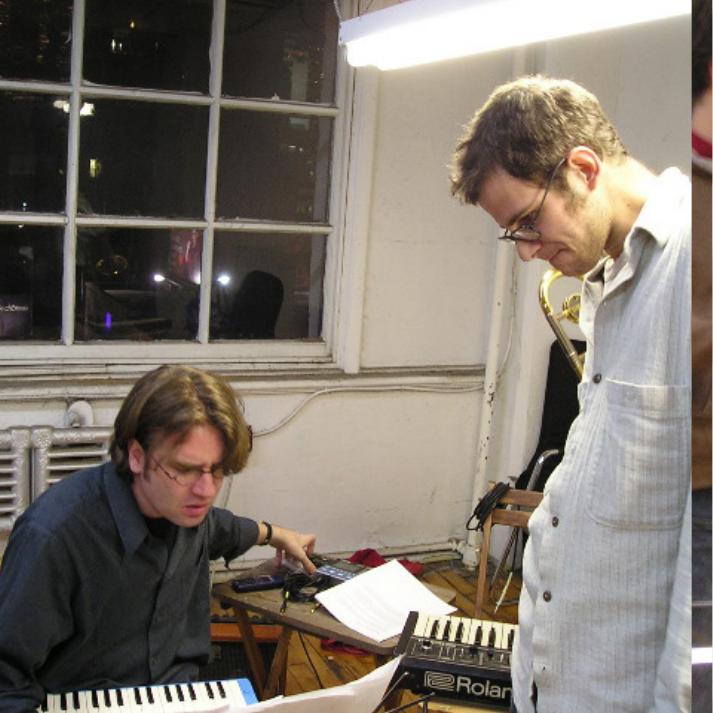
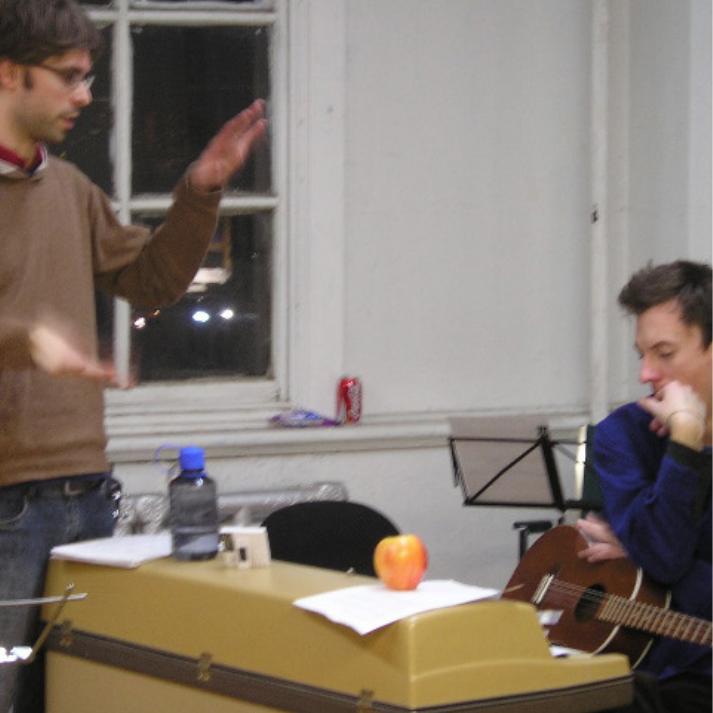
Having succeeded with solo shows, we thought we could extend our platform to other composers, our friends, similarly without access to the approved creative avenues. And so, the three-evening miniature festival "festivettes" coalesced. These were greatly fulfilling for me and lived up to my hopes for an aesthetically-freer, non-institutional experience.
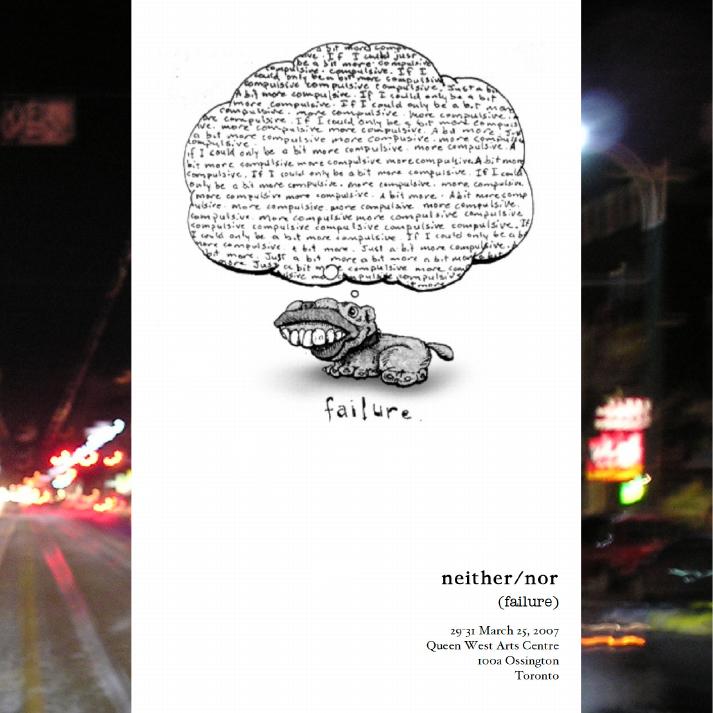
The festivettes—inconsequence - obscurity - (failure)—with titles that epitomized our attitude (mine for certain) in the face of the self-laureating "winners" of their own tiny star system. This even once leaving me to put into words "Please, God, let me be irrelevant!" when agape at the aesthetic vacuum of the approved relevant "featured composer-of-the-week." Do not worry, if you are reading this, that barb likely does not apply to you!
Often the old avant-garde becomes the new establishment over time. I have not really experienced that. In fact, I may be even further away… but, it is meaningless.
I am where I have always been.
inconsequence – obscurity – failure
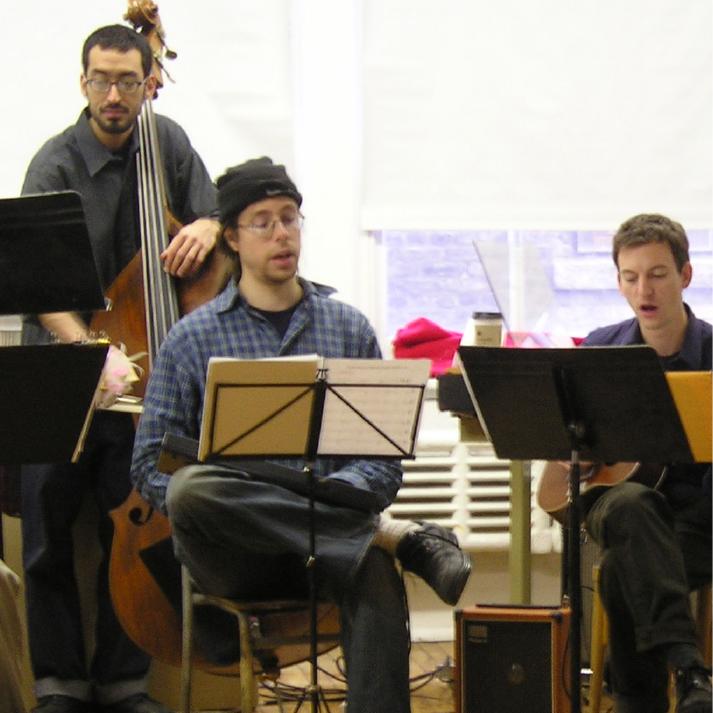
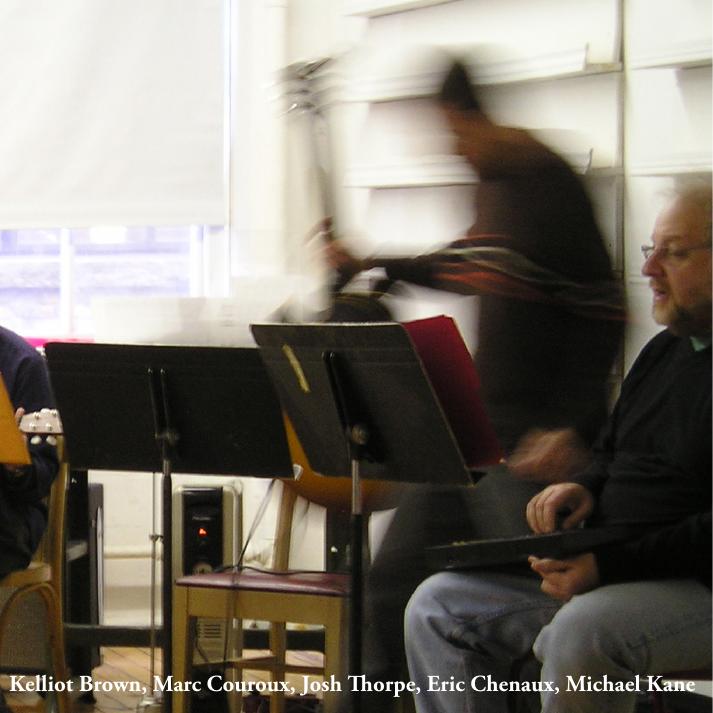
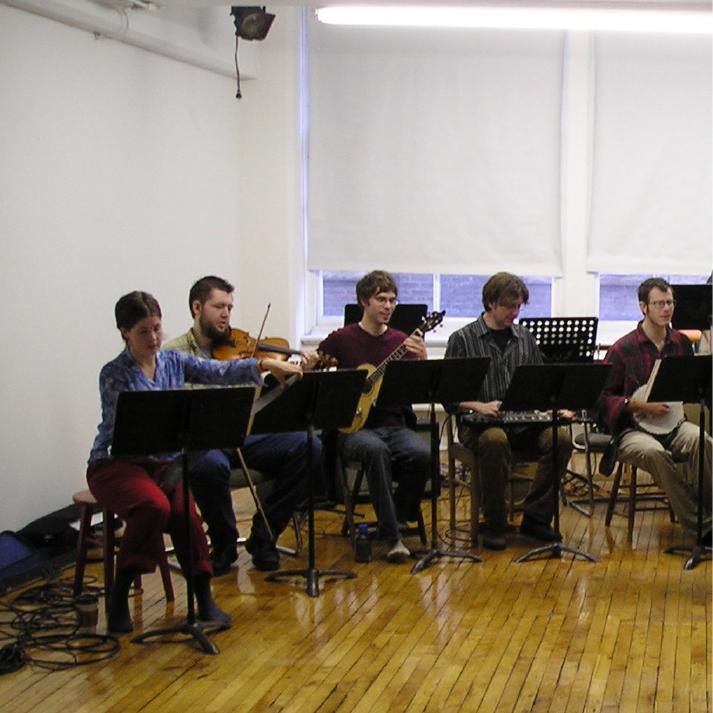
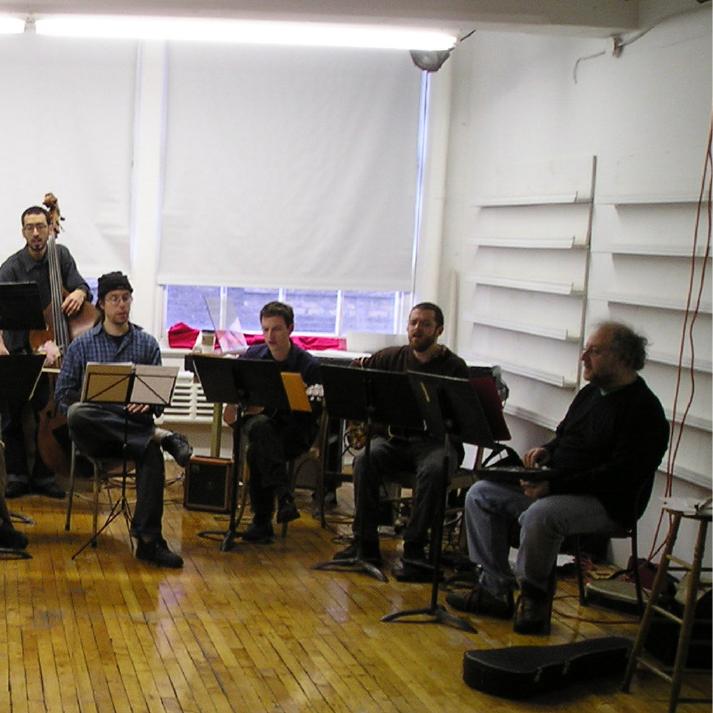
I owe endless thanks to all of my friends, the composers, I consider the neither/nor-istes, the neither/nor ensemble, who contributed pieces and played one another's works.
To eldritch - we followed one another into the cold and dark - but exited on the bright side.
To Marc Couroux - you were there all along, even before you were.
~ Sherlock


The more radical implication of this viral poetic is that if meaning is impelled by affective latchings, then it suggests that some forms of thought function virally. An extreme example can be seen in the obsessive-compulsive whose thinking is literally contaminated by ego-dystonic thoughts, thoughts at variance with the aims of the ego. To the obsessive-compulsive, these thoughts do not simply manifest in the mind and take their leave; whether they derive from one's own string of thought or plucked from a fleeting comment, suggestion, reading, they invade the belief system (the ego) and infect it with a profound but irrational doubt. This in turn (and I use this phrase to evoke the idea of "troping") provokes a response in which the affected person seeks to attain certainty and reduce anxiety through an elaborate, though irrational, system of cognitive and behavioral performances.
Deleuze and Guattari theorize the rhizome through the concept of schizophrenia. The obsessive-compulsive, unlike the schizophrenic, recognizes the irrationality of her thoughts and behaviour, but is nonetheless carried along, "rhizomatically", to distant and obscure – irrational – shores of ideas, beliefs and connexion. Both the schizophrenic and the obsessive-compulsive demonstrate a rhizomic nature of thought; however, where the schizophrenic "delights" in the fundamental "lubriety" of cognition, the obsessive-compulsive eccentrically and affectively networks mentation. The latter is an extreme notion of viral poetics at work in the becoming of thought, but it serves to illustrate how thoughts, detrimentally in some cases, possess the capacity to rest cognitive agency from the "ordinary" thinking subject and propel it elsewhere. It is interesting to speculate on how applicable this concept of a viral becoming is to the entire phenomenon of consciousness. If all thought proceeds by way of linkage and response to the coupling of affects, one could depathologize viral becoming by placing it in contexts that exploit the contaminative connexion to carry thought into an agnostic zone – the zone of art – where thinking translates viral becoming into "becoming-viral".
Borrowing from Arjun Appadurai, who expounds a system of five interfacing "scapes" that he defines as "perspectival constructs, inflected by the historical, linguistic, and political situatedness of difference sorts of actors," which form the building blocks of "imaginary worlds"ii, I suggest the embryonic presence of "alloscapes", although, I prefer the term "allotrope" as the becomings-viral of "anti-imaginary worlds", worlds that still accept the arrangement of the imaginary world but form an insubordinate array of its own.
A virus renders the operation of the body, the individual and societal, alien to itself. The individual body leaks fluids, heats up, cools down, calls in sick; the social body lapses into desuetude, shuts down production, loses capital, slows the economy. A virus introduces to the body an alternate functioning, a delitescent functioning that is immanent to bodily processes, yet made active only under discommode of a half-life. The point is that the virus alters the sensitivity of what the body can do. Applied to cultural and global bodies, a viral poetics constitutes the "allotrope" which instantiates the alternate functioning of imaginary worlds – "anti-imaginary worlds". The speeds and slownesses, density and slackening of these worlds, accustomed to certain flows of exchange, capital and communicative, are re-viewed, re-conceptualized, not from an outside but from a contaminated within.
Although similar in description to the Freudian "unconscious" that acts as an "other" within, the viral differs through its non-autonomy. Unlike the "unconscious", which Freud imputes with a peculiar autonomy, the viral must link with another series, be it a body, concept, image, text, in order to unleash its vital powers of contagion; it is necessarily hyphenated and metabolizes becoming in its very ability to connect. The "unconscious" is confined to replay the specific traumas of the subject; however, the connective capacity of the viral promotes flight. Infection does not simply disrupt but disassembles. It transfers hijacked fragments of code, meaning through variable terrains of possibility, mutating what it de/re-codes, and troping what remains. But the viral also possess a peculiar autonomy. From the position of the subject, the viral functions independently of human agency and affixes itself onto other fragments (of language) using bodies (humans) as hosts for reproduction and distribution.)
- eP